A kidney tumor is an abnormal growth that develops in the kidney. Not every kidney tumor is cancerous, and not every kidney tumor requires immediate surgery. The decision depends on several factors, including the size and location of the tumor, imaging characteristics, kidney function, the patient’s age and overall health, and whether there is evidence that the tumor has spread.
When a kidney mass is discovered, proper evaluation is important before deciding on treatment. Modern imaging such as contrast-enhanced CT or MRI is commonly used to characterize and stage renal tumors.
For patients searching for the Best Uro Cancer Surgeon in Indore, understanding when surgery is recommended and what surgical options are available can help in having a more informed discussion with a uro-oncology specialist.
Table of Contents
ToggleWhat Is a Kidney Tumor?

A kidney tumor is an abnormal mass that develops within the kidney. Kidney tumors can be benign or malignant.
A common malignant kidney tumor in adults is renal cell carcinoma (RCC). Some kidney masses are discovered accidentally during an ultrasound, CT scan or MRI performed for another medical concern.
The appearance of a kidney mass on imaging can provide important information, but further assessment may sometimes be needed before choosing treatment.
The treatment plan should therefore be based on the complete clinical picture rather than the presence of a kidney mass alone.
Does Every Kidney Tumor Need Surgery?
No.
Surgery is an important treatment for many localized kidney cancers, but it is not automatically required for every kidney mass.
For selected small renal tumors, particularly in patients where immediate treatment may not be necessary or surgery may carry significant risks, active surveillance can be considered. Active surveillance involves regular imaging to monitor the tumor and intervening if there is evidence of clinically significant progression. The 2026 EAU guidelines include active surveillance as an option for selected cT1a tumors where delayed intervention may be appropriate.
For a tumor that is suspicious for cancer and requires treatment, surgery may provide the opportunity for complete removal.
When Is Kidney Tumor Surgery Recommended?
Surgery may be recommended when the kidney tumor has characteristics that make active treatment appropriate.
Important considerations include:
1. Tumor Size
Tumor size is one of the factors used when planning treatment. Smaller tumors may often be treated with kidney-sparing surgery when technically feasible.
For localized T1 kidney tumors, current EAU guidance strongly recommends partial nephrectomy when appropriate.
2. Tumor Location
The location of a kidney tumor is just as important as its size.
A tumor near major blood vessels, the collecting system or other important structures may require more complex surgery. Imaging helps the surgeon understand the anatomy and plan the procedure.
3. Suspicion of Cancer
Some kidney masses have imaging characteristics that raise a strong suspicion of malignancy. The Bosniak classification, for example, is used for evaluating cystic renal masses, with higher categories carrying increasing concern for malignancy.
4. Tumor Growth
For patients undergoing active surveillance, changes in tumor size or other concerning features may lead the medical team to reconsider treatment.
5. Patient’s Overall Health
Age, kidney function, other medical conditions and the patient’s ability to undergo surgery all play a role in treatment planning.
The objective is to select an approach that appropriately balances cancer control, preservation of kidney function and surgical safety.

What Is Partial Nephrectomy?
Partial nephrectomy is a kidney-sparing operation in which the surgeon removes the tumor while preserving the remaining healthy portion of the kidney.
It is an important surgical option for appropriately selected localized kidney tumors.
Preserving functioning kidney tissue can be particularly valuable because maintaining kidney function is an important part of long-term health. Current EAU guidance recommends partial nephrectomy for patients with T1 tumors.
Partial nephrectomy can be performed through open, laparoscopic or robot-assisted techniques depending on the tumor and the experience of the surgical team.
What Is Radical Nephrectomy?
Radical nephrectomy involves removing the entire affected kidney along with surrounding tissues as appropriate.
It may be considered when the tumor is large, complex, centrally located, or cannot be safely removed while preserving an adequate amount of functioning kidney tissue.
For some larger localized tumors, radical nephrectomy may be the appropriate surgical option. However, current guidelines recommend avoiding removal of the entire kidney when a suitable partial nephrectomy can safely achieve the required cancer treatment.
Partial vs Radical Nephrectomy
The choice between partial and radical nephrectomy is individualized.
Partial nephrectomy:
- Removes the tumor while preserving part of the kidney.
- Aims to preserve kidney function.
- Commonly considered for suitable T1 tumors.
- Can be performed using open, laparoscopic or robotic techniques.
Radical nephrectomy:
- Removes the entire affected kidney.
- May be considered for tumors that are not suitable for partial nephrectomy.
- Can also be considered for selected larger or more complex tumors.
The decision is not based on tumor size alone. Tumor location, anatomy, kidney function and surgical feasibility all matter.
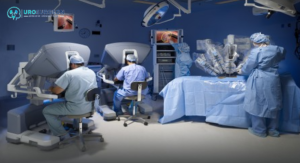
Is Robotic Surgery an Option for Kidney Tumors?
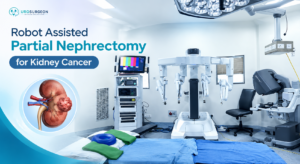
For selected patients, robot-assisted partial nephrectomy can be used to remove a kidney tumor while preserving healthy renal tissue.
Robotic surgery is performed by the surgeon using specialized instruments and a magnified camera system. The robot does not independently perform the operation.
According to the EAU, partial nephrectomy can be performed through open, laparoscopic or robot-assisted approaches depending on the surgeon’s expertise and skills. Robot-assisted and laparoscopic partial nephrectomy are also associated with shorter hospital stays and lower blood loss compared with open partial nephrectomy in the evidence summarized by the guideline.
Whether robotic surgery is appropriate depends on the individual tumor and surgical circumstances.
What Tests Are Done Before Kidney Tumor Surgery?
Before treatment, the specialist usually reviews the patient’s medical history, kidney function and imaging.
A multiphasic contrast-enhanced CT scan of the abdomen and chest is recommended for diagnosis and staging of renal tumors. MRI may also be used in selected situations, including when additional assessment of venous involvement is required or when CT contrast should be avoided.
A kidney tumor biopsy is not necessary in every patient. However, a biopsy may be considered in selected situations, including some patients considering active surveillance, and is recommended before ablation.
What Happens After Kidney Tumor Surgery?
The removed tumor is sent for pathological examination. The pathology report provides important information about the tumor type, grade, stage and surgical margins.
Follow-up after treatment is also important. Surveillance can help monitor kidney function, detect local recurrence or disease in the opposite kidney, and identify distant recurrence when applicable.
Follow-up schedules vary according to the patient’s individual risk and treatment.
Can a Kidney Tumor Be Monitored Without Surgery?
In selected patients, yes.
Active surveillance means monitoring a kidney tumor through regular imaging rather than treating it immediately. This approach may be considered for selected small renal masses, particularly when the risks of immediate treatment need to be weighed against the expected benefits.
It is different from simply ignoring the tumor. Patients undergoing active surveillance require planned follow-up and imaging, with treatment considered if the tumor demonstrates concerning progression.
How to Choose a Kidney Cancer Surgeon in Indore?
A kidney tumor requires individualized evaluation. Patients should understand whether the mass appears benign or suspicious, whether surgery is recommended, and which surgical approach may be appropriate.
If you are looking for the Best Uro Cancer Surgeon in Indore, consider discussing:
- The size and location of the kidney tumor
- Whether the tumor is localized
- Whether partial nephrectomy is possible
- Whether robotic surgery is appropriate
- The expected effect on kidney function
- Alternative treatment options
- The need for follow-up after treatment
A specialist in uro-oncology can review the imaging and clinical findings and explain the available treatment options according to the individual case.
Conclusion
A kidney tumor does not automatically mean that the entire kidney needs to be removed—or even that surgery is immediately necessary. Treatment depends on the nature of the tumor, its size and location, kidney function, overall health and the likelihood of progression.
For selected localized kidney cancers, partial nephrectomy is an important kidney-sparing treatment. Radical nephrectomy may be appropriate when partial nephrectomy cannot safely or effectively treat the tumor. In carefully selected patients, active surveillance or other non-surgical approaches may also be considered.
If you have been diagnosed with a kidney tumor, consultation with an experienced Best Uro Cancer Surgeon in Indore can help you understand whether surgery is needed and which treatment approach may be appropriate for your condition.
Frequently Asked Questions
1. Does every kidney tumor require surgery?
No. Some kidney tumors can be monitored with active surveillance, particularly selected small renal masses. The decision depends on imaging findings, tumor characteristics, patient health and other factors.
2. When is partial nephrectomy recommended?
Partial nephrectomy is commonly recommended for suitable localized T1 kidney tumors because it removes the tumor while preserving healthy kidney tissue.
3. When is radical nephrectomy needed?
Radical nephrectomy may be considered when a kidney tumor is too large, complex or poorly positioned for safe partial nephrectomy, or when complete removal of the kidney is considered the appropriate treatment.
4. Is robotic surgery suitable for every kidney tumor?
No. Robotic surgery is an option for selected patients. Tumor size, location, complexity, kidney function and the surgeon’s experience all influence whether robot-assisted surgery is appropriate.
5. How can I choose a kidney tumor surgeon in Indore?
Discuss your imaging, kidney function, diagnosis and treatment options with a qualified uro-oncology specialist. If you are searching for the Best Uro Cancer Surgeon in Indore, ask specifically about experience with kidney tumor surgery, partial nephrectomy and robotic procedures.