Penile cancer is a rare cancer that develops in the tissues of the penis. Because changes on the penis can sometimes be mistaken for an infection, irritation, or other skin condition, people may delay getting them checked. Early diagnosis is important because penile cancer is generally much easier to treat when found at an early stage.
If you notice a persistent change, lump, sore, bleeding, or unusual growth on the penis, consulting the Best uro oncologist in indore can help identify the cause and guide you toward the right evaluation.
What Is Penile Cancer?
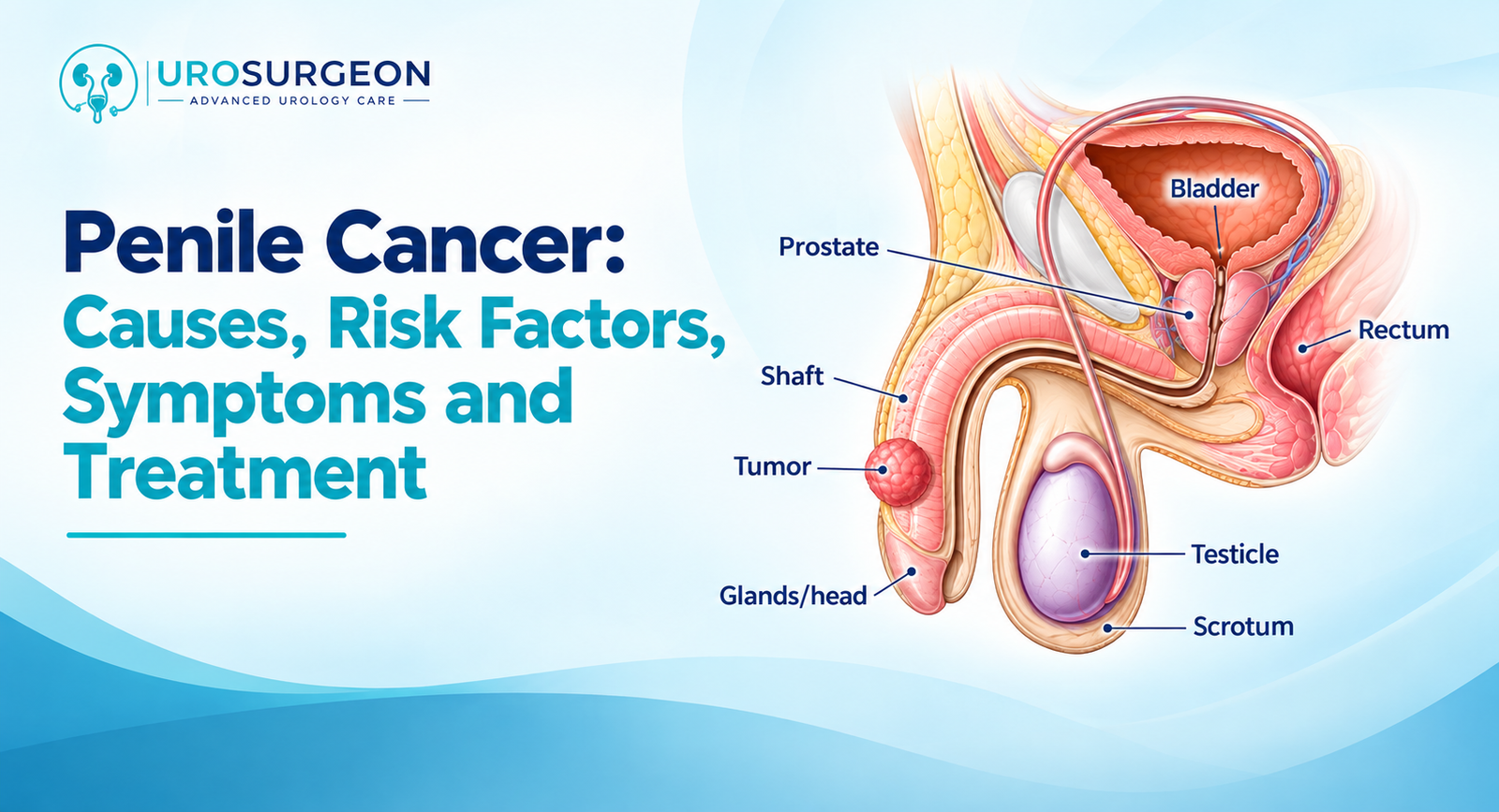
Penile cancer occurs when abnormal cells in the tissues of the penis begin to grow uncontrollably. The most common type is squamous cell carcinoma. It can develop on the foreskin, glans, or other parts of the penis.
Not every penile lesion is cancer. Infections, inflammation, and other skin conditions can produce similar symptoms. However, a change that does not heal or keeps returning should be medically evaluated rather than ignored.

Causes and Risk Factors of Penile Cancer
There is no single cause of penile cancer. Certain factors can increase the likelihood of developing the disease.
Human Papillomavirus (HPV)
HPV infection is an important risk factor associated with penile cancer. Certain types of HPV can cause changes in cells that may eventually contribute to cancer development. NCI notes that HPV is associated with a substantial proportion of penile cancer cases.
Smoking and Tobacco Use
Tobacco products can increase the risk of several cancers, including penile cancer. Avoiding tobacco is an important step toward reducing cancer risk.
Poor Genital Hygiene
Poor hygiene, particularly in men who are uncircumcised, has been associated with an increased risk. Regular and gentle cleaning of the genital area is important.
Phimosis
Phimosis occurs when the foreskin cannot be pulled back properly over the head of the penis. It can make hygiene difficult and is recognized as a risk factor for penile cancer.
Age
The risk of penile cancer increases with age, with older men being more commonly affected. However, younger men should not ignore unusual penile changes.
Having a risk factor does not mean that a person will definitely develop cancer. Likewise, penile cancer can occur in someone without obvious risk factors.
Symptoms of Penile Cancer
One of the most important things to remember is that persistent penile changes should not be ignored.
Possible signs and symptoms include:
- A lump or growth on the penis
- A sore or ulcer that does not heal
- Changes in skin color or thickness
- A reddish or velvety patch
- Crusty or unusual growths
- Bleeding from a lesion
- Swelling of the penis
- Foul-smelling discharge under the foreskin
- Difficulty pulling back the foreskin
- Enlarged lymph nodes in the groin
Many of these symptoms can also occur with infections or other non-cancerous conditions. However, if a lesion persists, returns after treatment, or gradually becomes worse, it should be examined by a doctor.
A Best uro oncologist in indore can assess the lesion and determine whether further testing is required.

How Is Penile Cancer Diagnosed?
Diagnosis usually begins with a physical examination and a detailed medical history. If an area looks suspicious, a biopsy may be performed.
During a biopsy, a small sample of tissue is removed and examined under a microscope to determine whether cancer cells are present. Further tests may be recommended if there is concern that the cancer has spread to nearby lymph nodes or other areas of the body.
The stage and grade of the cancer help doctors understand how extensive the disease is and select the most appropriate treatment.
Treatment Options for Penile Cancer
Treatment depends on the size and location of the tumor, its stage, how deeply it has grown, lymph-node involvement, overall health, and other individual factors.
Local Treatment and Surgery
For some early cancers or precancerous lesions, treatments may include local excision, laser treatment, topical therapy, or other penis-preserving approaches when appropriate.
Surgery remains the most common treatment for penile cancer. Depending on the tumor, options can range from removal of the affected area to partial or total penectomy in more advanced cases. Lymph nodes in the groin may also need evaluation or treatment in selected patients.
Radiation Therapy
Radiation therapy uses high-energy radiation to destroy cancer cells or slow their growth. It may be considered for selected penile cancers depending on the stage and location.
Chemotherapy
Chemotherapy may be used in certain situations, particularly when cancer is more advanced or has spread. It can sometimes be combined with surgery or radiation.
Immunotherapy
Certain immunotherapy approaches may also have a role in selected cases. The treatment plan is individualized according to the type and stage of cancer.
Why Early Detection Matters
Early detection can provide more treatment choices and may allow doctors to use treatments that preserve more normal penile tissue and function. NCI notes that early-stage penile cancer is highly curable.
This is why embarrassment or fear should not prevent someone from seeking medical advice. A small lesion may be easier to treat than a cancer that has been allowed to progress.
If you notice an unusual penile change that does not improve, consulting the Best uro oncologist in indore can help ensure that the problem is properly assessed.
Follow-Up After Treatment
Follow-up remains important even after successful treatment. Doctors may perform regular examinations and other tests to look for signs of recurrence. The follow-up schedule depends on the original cancer, treatment received, and individual risk.
Patients should also report any new lump, swelling, skin change, bleeding, or other unusual symptoms rather than waiting for the next scheduled appointment.
Conclusion
Penile cancer is uncommon, but unusual or persistent changes on the penis should never be ignored. HPV infection, tobacco use, phimosis, poor hygiene, age, and other factors can increase risk. Early evaluation can make a significant difference because treatment is generally more successful when the disease is detected at an earlier stage.
If you notice a persistent sore, lump, growth, skin change, bleeding, or swelling, speak with a qualified specialist. The Best uro oncologist in indore can help with timely diagnosis and explain the most suitable treatment options based on your condition.
Frequently Asked Questions (FAQs)
1. Is penile cancer curable?
Penile cancer can be highly curable when diagnosed and treated at an early stage. The outcome depends on factors such as the stage, tumor characteristics, and whether lymph nodes or other parts of the body are involved.
2. What is the most common symptom of penile cancer?
Possible symptoms include a persistent sore, lump, skin discoloration, thickening, unusual growth, bleeding, discharge, or swelling. Any persistent penile lesion should be evaluated by a doctor.
3. Is HPV linked to penile cancer?
Yes. HPV infection is an established risk factor associated with penile cancer.
4. Does every penile lump mean cancer?
No. Penile lumps and skin changes can have several causes, including infections and other non-cancerous conditions. However, a lump or lesion that persists or returns should be medically examined.
5. When should I consult the Best uro oncologist in indore?
You should seek medical evaluation if you notice a penile sore that does not heal, a persistent lump, unusual growth, bleeding, skin changes, discharge, swelling, or enlarged groin lymph nodes. Early assessment can help identify the cause and, when necessary, begin treatment promptly.
Medical note: This article is for general awareness and does not replace an in-person medical examination or individualized medical advice.